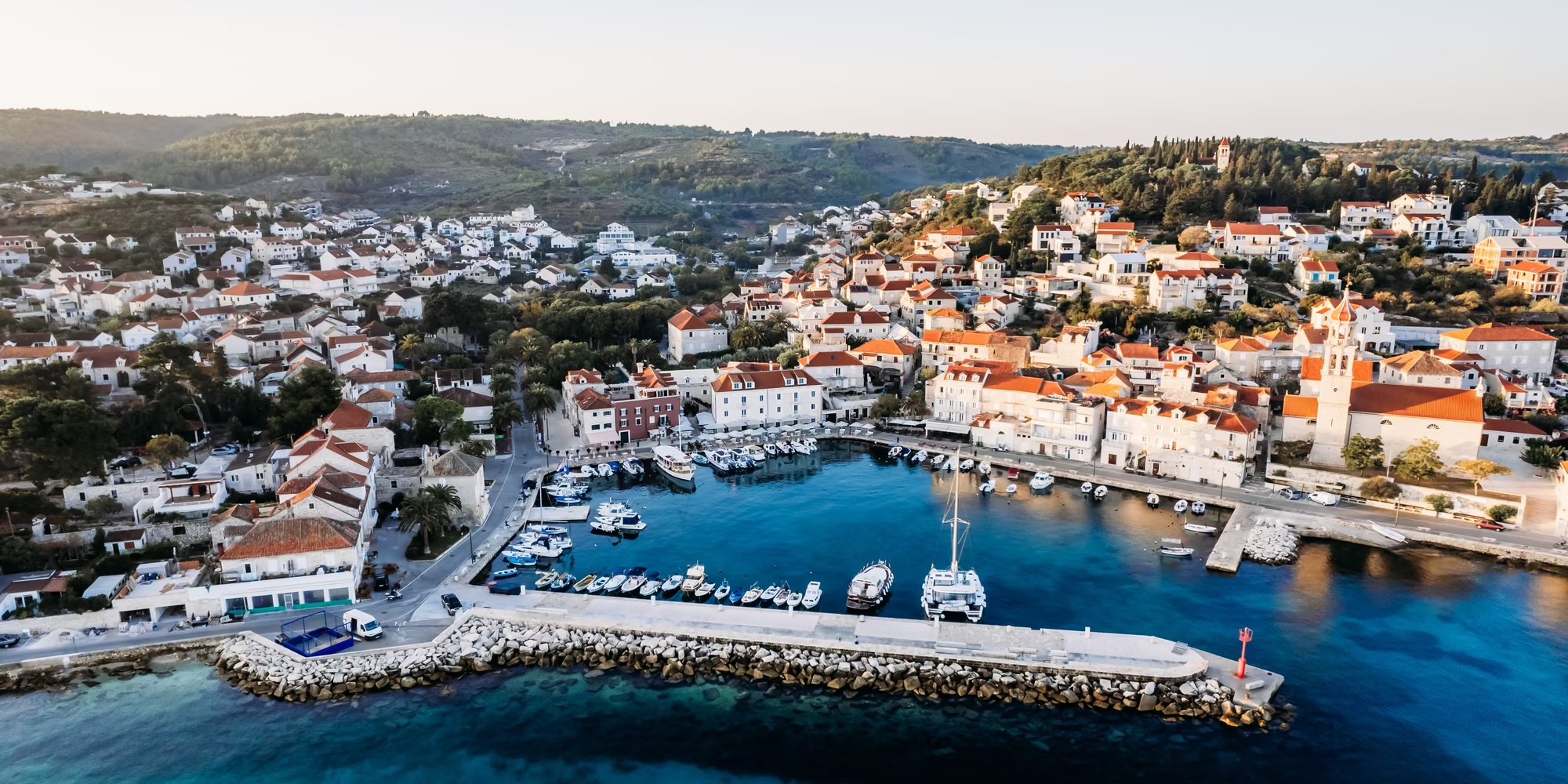
A Literary Journey to Croatia
Every day can be a lovely day, whatever the weather. Because when the weather isn’t at its best, it’s the perfect time to curl up on the sofa with a good book. Without worrying about missing out on anything outside and without feeling guilty, we can lose ourselves in a world of warmth over a delicious cup of tea and a good book.
20 November 2025
Why we should read more often
We know this anyway: reading a lot expands your vocabulary and sharpens your cognitive skills. But there are many other positive effects on health and the brain; it’s even said to prolong life if you pick up a book regularly. If you read to educate yourself, you should pick up a real, physical book rather than a tablet or an e-reader. According to an American study, we actually remember content better when we hold it in our hands in printed form. Exactly why this is the case, however, is not entirely clear. Perhaps it has to do with the texture of the surface, the smell of paper or the weight of a book.
A study by the University of Sussex in England also showed that reading can reduce stress. By as much as 68 per cent – regardless of whether we pick up a book or a magazine. It also seems to make little difference whether we read a thriller or a comic, as almost 60 per cent of people who read regularly say they find it very relaxing. Of course, the fact that we sit still and concentrate on one thing whilst reading plays a part in this. Whilst images form in our minds, our thoughts have no time to wander.

Brain training
As we get older, the brain finds it harder to take in information, and our active vocabulary also shrinks. However, there is evidence to suggest that this process can be slowed down significantly by reading frequently. There is also a measurable link between the risk of dementia and active reading: the more we read, the lower the risk. Another finding from America: people who read a lot live on average 23 months longer than those who spend their free time without books.

But why is reading such a healthy pastime? When we read, the brain’s physiology changes: the central sulcus and the area responsible for language processing experience an improved flow of information. In contrast, watching television or consuming other moving-image content actually increases the risk of dementia.
Croatian literature
Naturally, a country as diverse as Croatia has produced a correspondingly varied literary landscape. It is therefore almost impossible to list all the significant literary figures from Croatia. However, anyone wishing to embark on a mental journey to 19th-century Croatia should pick up a work by August Šenoa. He vividly describes what moved the petty bourgeoisie of his time.
His colleague, Vladimir Nazor, was born in 1876 on Brač, where he also attended primary school. He is still regarded today as a prolific writer. Nazor, who worked as a teacher, wrote poems, ballads, novels, short stories and essays. We would particularly like to recommend his work ‘The Shepherd Loda’ (original: Pastir Loda) to book lovers. It tells the story of his homeland, Brač. Nazor is so significant that one of the most important Croatian cultural awards, several schools, a ferry and even several streets are named after him, two of them on the island of Brač (Ul. Vladimira Nazora). One of these is just a 13-minute drive from the Hotel Lemongarden .
Tip!
Fancy spending the winter break at Hotel Lemongarden with a touch of summer? Julie Caplin’s novel *The Little Bay in Croatia* is a light-hearted feel-good story full of romance. A holiday atmosphere is guaranteed! And because the anticipation is half the fun, you can book your holiday at Hotel Lemongarden for next year right here – so it doesn’t just remain a mental trip to Croatia.