Carnival in Croatia
There are certain carnival celebrations that one immediately associates with a particular city. When you hear the word ‘carnival’, for example, you think of Venice, Rio de Janeiro or Cologne. But the carnival in Croatia is also a colourful, joyful affair. Depending on the region, it is celebrated in different ways and with different traditions. The best-known celebrations are those in Rijeka (Kvarner Bay) and Samobor (Zagreb). In Dalmatia, however, the celebrations are just as lively, albeit on a slightly smaller scale.
2 February 2026
Carnival in Dalmatia
Whilst here in Germany the carnival season officially begins on 11 November at 11.11 a.m. the previous year, in Croatia it doesn’t get underway until 17 January. The date may not look as amusing as 11.11, but it wasn’t chosen at random. It is, in fact , the feast day of St Anthony (Sv. Antun), which is also celebrated on Brač. Around St Anthony’s Day, there are folk festivals with good food and music. The fact that this also marks the start of the carnival season is rather convenient. In Croatia, this is known by various names, depending on the region you are in: Poklare, Fašnik, Mesopust, Maškare. The customs surrounding carnival in Croatia have – much like in other countries – given rise to certain traditions and figures.
In Dalmatia, one of these is Krnjo. This is a doll stuffed with straw. It is, so to speak, the scapegoat for everything bad that happened in the past year: the weather, financial worries, the political situation, relationship problems. In a sort of ‘trial’ before a ‘court’, all the blame is laid at Krnjo’s feet. And then the poor fellow meets his end, usually by being burnt. This is a symbolic way of bidding farewell to negativity and making room for hope. Naturally, all this takes place in the presence of numerous witnesses.
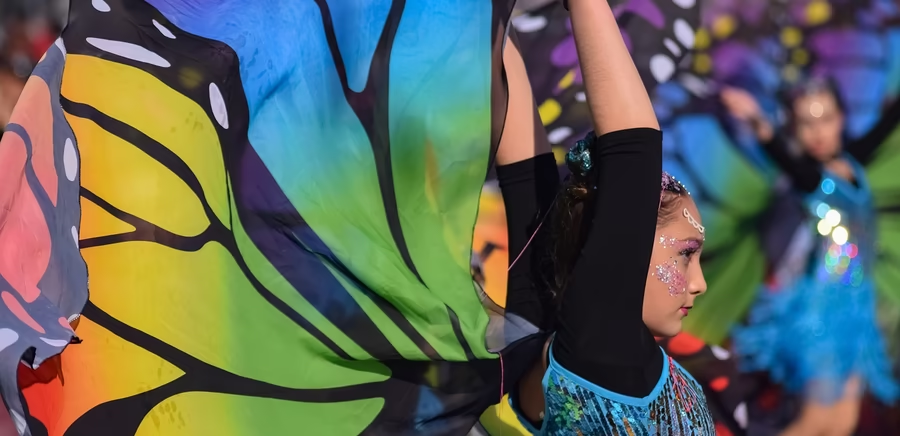
Celebrating Carnival in the south
Naturally, the spectators dress up. They take to the streets as so-called ‘Maškare’, or masked figures. On Shrove Tuesday, they symbolically take control of a town or village. Parades with large numbers of participants and processions then dominate the townscape. The costumes vary enormously. Batman and Robin are out and about, as are princesses and police officers. Regional political figures are also the butt of the jokes. Many hours of work go into preparing the carnival floats. Groups often start as early as the summer. The highlight and conclusion of the day is the burning of the Krnjo. People wait until the celebrations have drawn to a close – so that the sins of the day of folly can be burnt along with it...
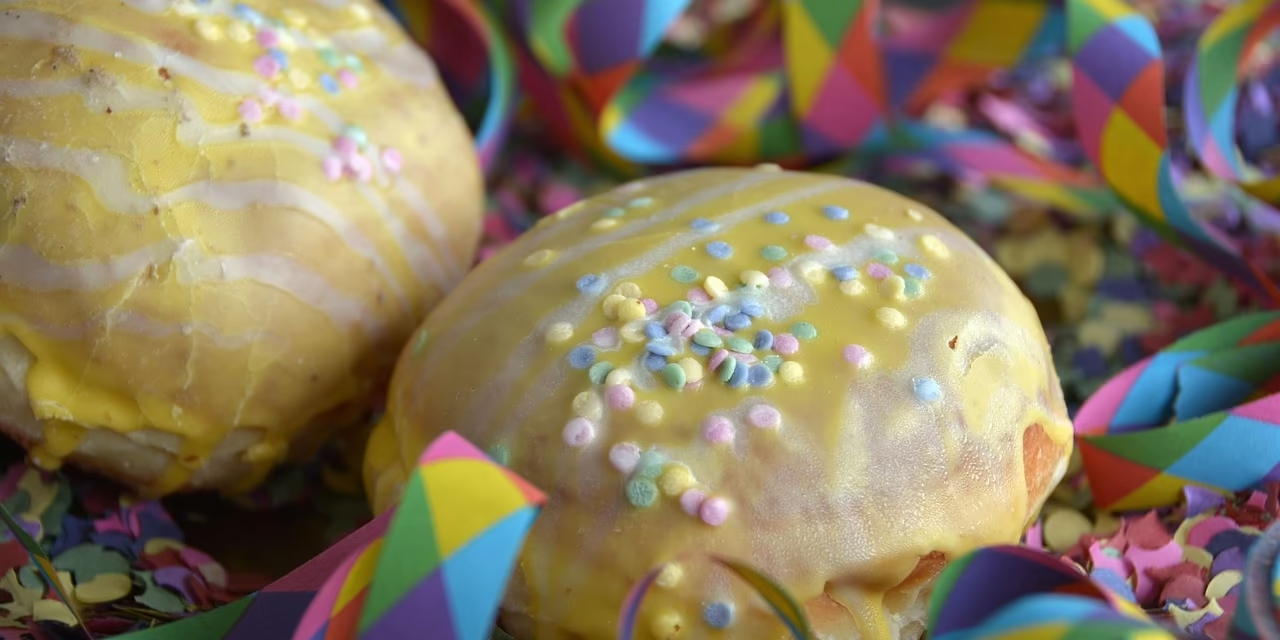
Just as people in Austria enjoy eating doughnuts during the carnival season, there is also a culinary tradition in Croatia. Here too, people are familiar with sweet dough fried in oil. However, the Dalmatian version of the doughnut, called fritule, is smaller and perfectly round. They are eaten sprinkled with sugar or with chocolate sauce. Their peak season begins at Christmas. The same applies to kroštule. These are long, wide strips of dough that are also fried in oil.
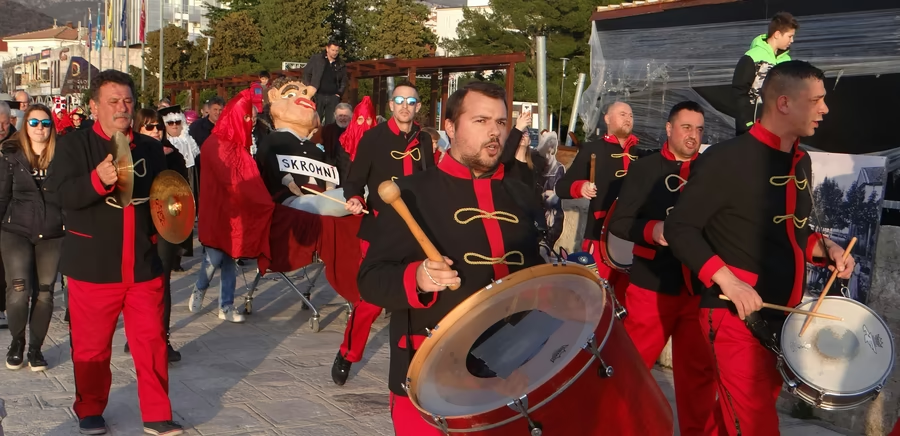
Famous carnival celebrations in the south
Carnival celebrations can be found throughout the country, though the traditions are observed in different ways. On the Dalmatian island of Lastovo, for example, the customs of the ‘fifth season’ are observed with particular reverence. Here, people celebrate Poklad, a commemoration of the moment when God is said to have driven pirates from the island. As early as Monday, they prepare the so-called Poklad doll: shaped from straw and earth, a tailor dresses it in an outfit. Others make so-called carnival bombs from gunpowder and aluminium foil. Once the preparations are complete, the men of the village gather, dressed in terrifying costumes, to collect eggs. These are used as food on Ash Wednesday.
On Shrove Tuesday, the women dress up more attractively and in pairs. They perform a dance in the town hall square, after which they visit the mayor together with the men. He is supposed to grant permission to drag the Poklad doll, tied to a rope, down a hill and then burn it. Essentially, this is a variation on the Krnjo tradition. The individual elements of this centuries-old celebration attract large crowds, who celebrate with music and drinks until late into the night.
Tip!
With the end of the carnival season, the darkest time of the year is also over. The days are getting longer again, and the sun is slowly gaining strength. As nature comes back to life, the annual winter break at Hotel Lemongarden also comes to an end. When we welcome guests back to our seaside hideaway from 26 April 2026, it will mark the start of another unforgettable season on Brač. Book your getaway with us today!