The main attractions on Brač
Anyone who has ever visited the Croatian island of Brač knows just how beautiful and fascinating it is. As well as excellent olives, crystal-clear waters and romantic coves, it also boasts pretty villages and plenty of friendly people. There is certainly no shortage of important cultural heritage sites on Brač, even though the island does not yet have any official UNESCO World Heritage Sites.
29 January 2026
Astronomical Legacy: Blaca Hermitage
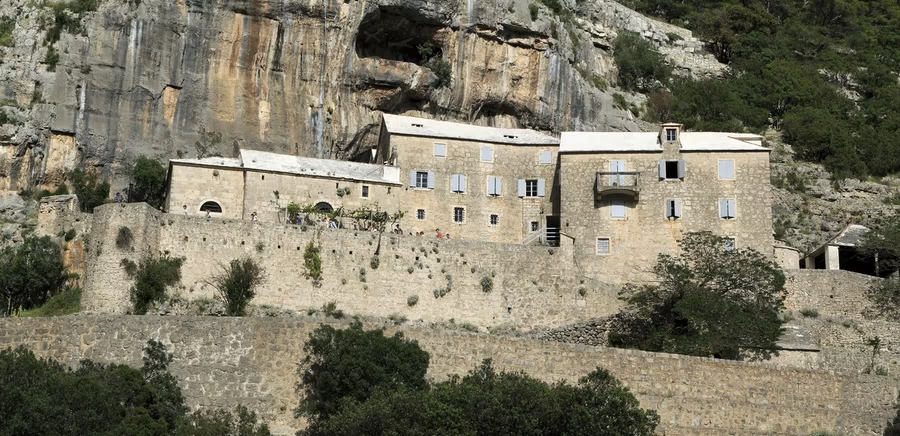
For a site to be included on the UNESCO World Heritage List, it must meet strict criteria. For example, it must be a unique testimony to a cultural tradition. The assessment is carried out by a committee comprising 21 states and can take years. The Blaca Hermitage (Pustinja Blaca) is currently on the Tentative List. The impressive hermitage, built into a rock face, would certainly deserve the official status of a UNESCO World Heritage Site. Yet even without this title, it remains an extraordinary place. Founded in 1551 by two monks in the interior of the island, it developed into a large monastic complex by the 18th century.
In the 19th century, the hermitage fell into decline. Father Nikola Miličević then used it as an observatory. And quite successfully at that. From here, he discovered Novae and comets. In recognition of his achievements, the International Astronomical Union named two asteroids after him 20 years ago: Brač and Nikola Miličević. Today, there is a small museum at the monastery. The Blaca Hermitage is located just 20 kilometres from the Hotel Lemongarden on the island’s south coast. It is definitely worth a visit!
Stone heritage sites
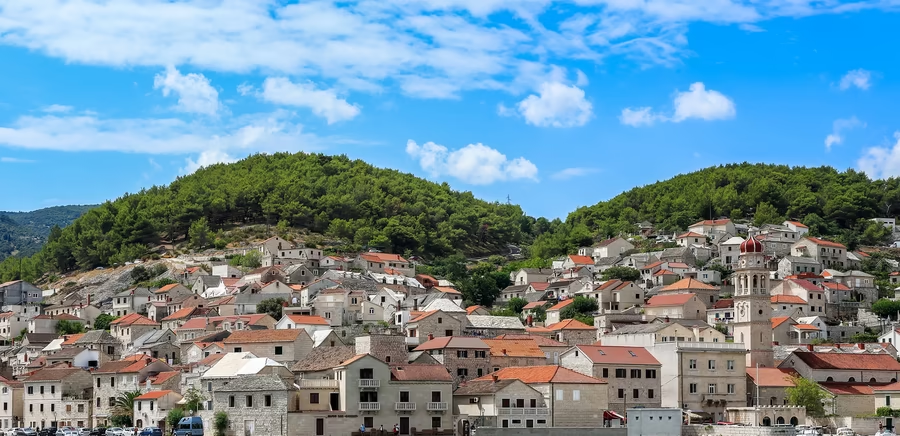
The island of Brač is inextricably linked to the gleaming white limestone that has been quarried here for centuries. Formed during the Upper Cretaceous period, this material has enjoyed tremendous success all over the world. Not only parts of Diocletian’s Palace in Split, but also the White House in Washington, D.C., are built from this stone. It is not only beautiful and versatile, but also highly durable. Furthermore, it is characterised by its smooth surface and brilliant white colour. This makes it so appealing for palaces, sculptures and religious buildings. The stonemasonry trade is consequently held in high regard on the island. Passed down through generations, the knowledge surrounding the stone and its working remains a source of pride among the locals to this day. In Pučišća, those interested can visit the quarries. This is also home to the last stonemasonry school in Europe. An interesting side note: geologically speaking, the white stone from Brač is not marble, even though it is often referred to as such.
Churches and chapels on Brač
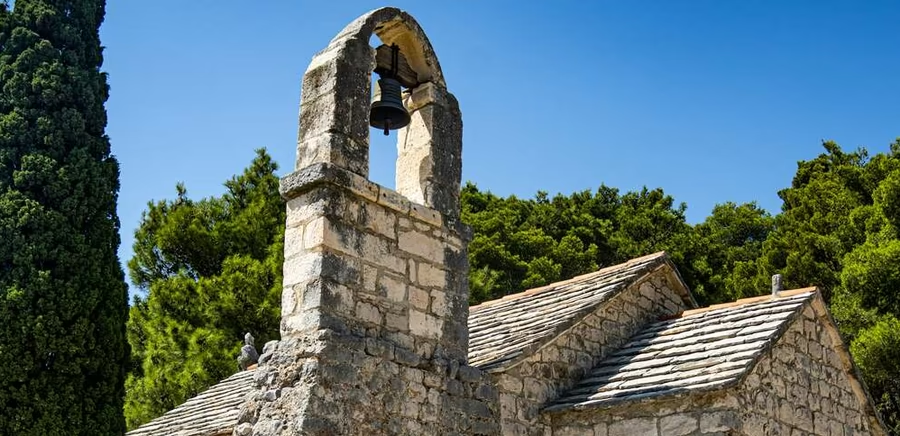
Of course, when it comes to architecture, the island has more to offer than just a rock-cut monastery and numerous quarries. For one thing, there are over 100 churches and chapels dotted across the island. The Basilica of Povlja is particularly well-known. It dates back to early Christian times, specifically the 6th century. Although built by the Romans, it is no longer entirely preserved, yet anyone walking through its ruins cannot help but be impressed. Right next to it stands the parish church of St John the Baptist. Incidentally, very close by, along the waterfront promenade, there are two statues carved from the island’s white stone.
In Lovrečina, between Postira and Pučišća, lies a significant archaeological site and an important cultural heritage site on Brač: the Lovrečina Basilica. Its ruins are situated on one of Brač’s rare sandy beaches. Walls, colonnades and foundations can still be seen today. Every year on 10 August, the ruins are visited by large numbers of people who come here to celebrate the feast of Saint Lawrence.
An extraordinary cultural heritage site on Brač: The Dragon’s Cave
There is one place you simply must see when holidaying on Brač: the Dragon’s Cave (Zmajeva Špilja) above the small village of Murvica. To visit it, you hike uphill for about half an hour to this memorable site. This is the place that served as a temple and home to the monks of Pojica. Today, it is a place shrouded in many legends. Among them is the tale that a one-eyed giant dragon once lived in the cave.
That is where it gets its name. A 15th-century relief bears witness to the many stories associated with it. To prevent damage to this special place, the cave can only be visited as part of a guided tour. It is definitely worth a visit! The journey to Murvica on the south coast takes just over an hour from the Hotel Lemongarden, situated right by the sea on the north coast. Once there, you can also stop off at the Golden Horn (Zlatni rat).
Tip!
The climb to the Dragon’s Cave is a special experience, especially in spring when the temperatures are still mild. Take this opportunity to book your stay at the Hotel Lemongarden now. We’ll be back to welcome you from 26 April 2026!