Shooting stars on holiday
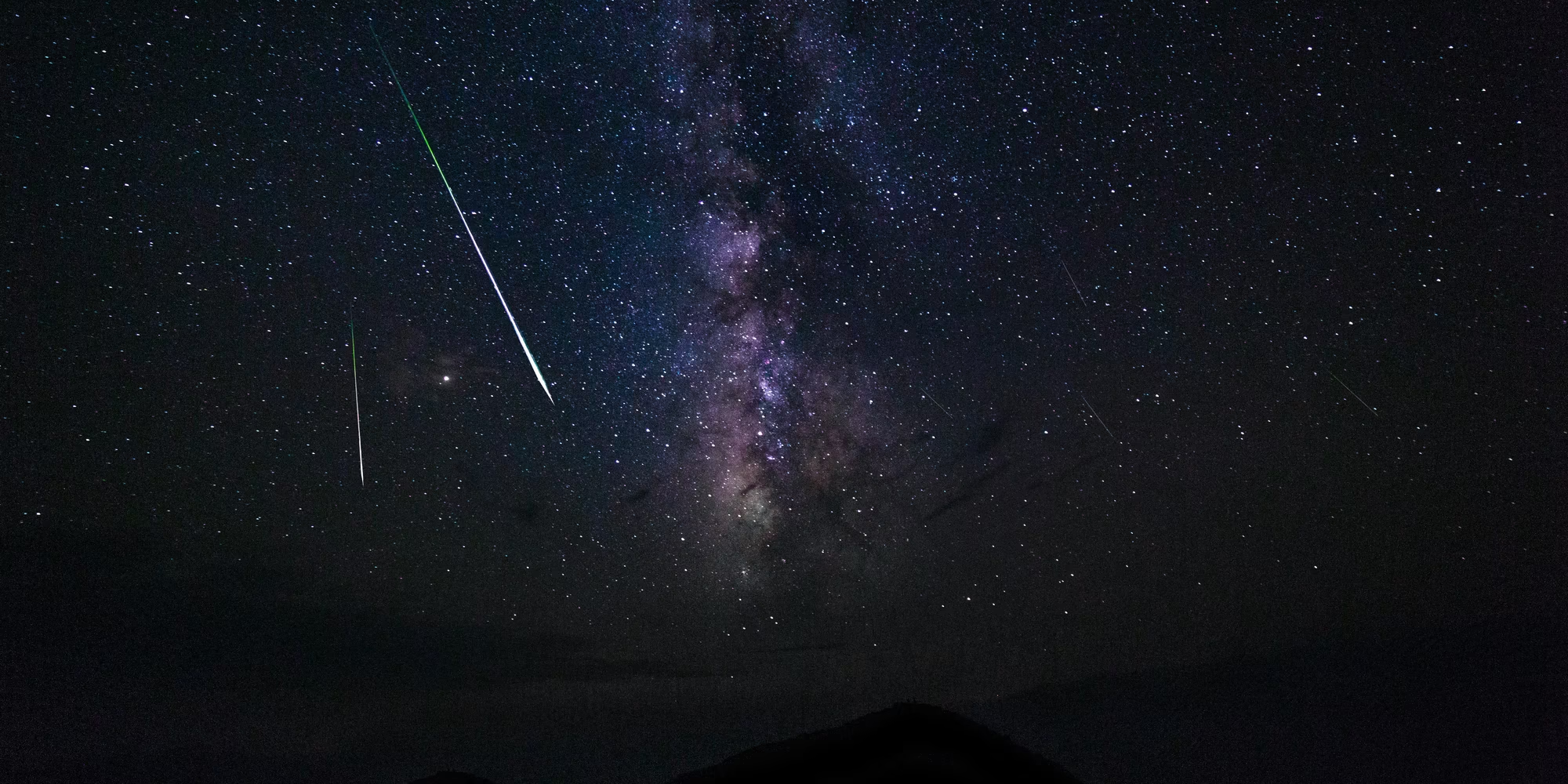
About every 133 years, the comet known as 109P/Swift-Tuttle orbits the Sun. As it does so, it leaves behind a substantial trail of dust that drifts through space. Although this may not sound particularly romantic, it manifests itself on Earth every summer as an utterly enchanting spectacle: as the Earth passes through the dust trail, the meteors burn up. What we observe is a large number of shooting stars, also known as the ‘Perseids’.
21 July 2025
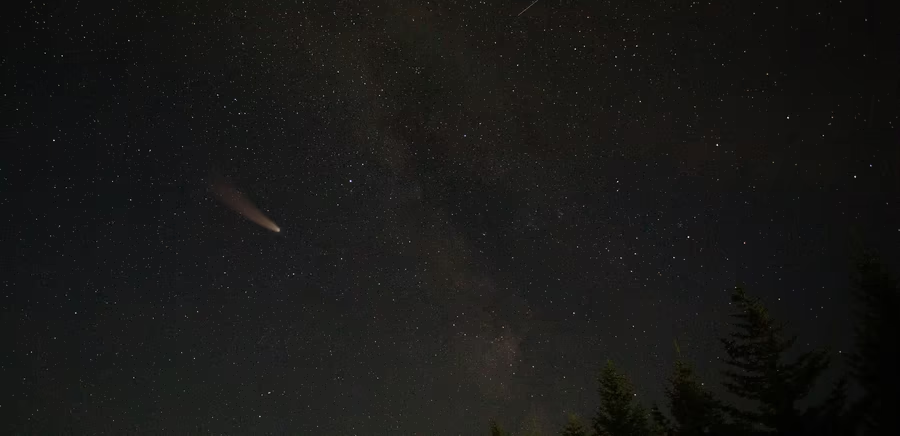
Can you see shooting stars on Brač?
Although shooting stars can be seen throughout the year and Comet 109P/Swift-Tuttle is not always responsible for them, the Perseids are a highlight for astronomy enthusiasts because the comet’s dust trail is so dense that a large number of shooting stars light up the night sky in a short space of time. They occur every year between 17 July and 24 August, peaking between 11 and 13 August. Under ideal conditions, up to 100 shooting stars per hour can be seen.
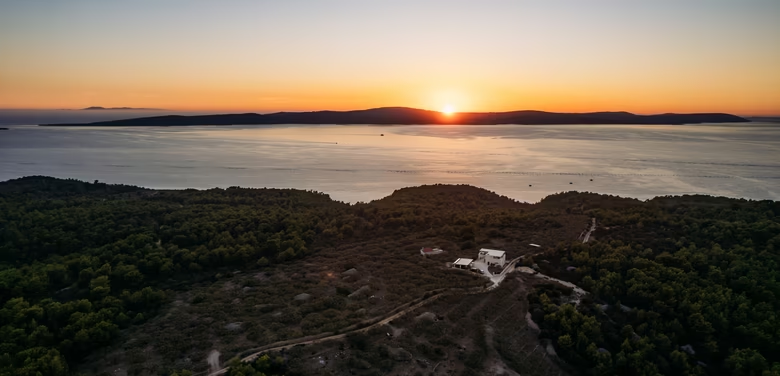
And there is no doubt that ideal conditions on Brač make watching shooting stars a real treat. The less light pollution there is, the better you can see the glowing trails in the sky. Brač is not very densely populated; there are no large towns. Light pollution is therefore minimal, and the view particularly spectacular. This year there is another reason to look up: 1 August is a new moon. This means that on the night of 12 August it will be very dark, and the moon will not outshine the stars. Ideal for sightings!
Fun fact: The Perseids do not ‘plunge’ towards Earth
It is interesting to note that the Perseids are not meteors moving towards Earth of their own accord. What looks to us as though it is falling from the sky is, in fact, exactly the opposite: the Earth moves into the dust trail and ‘sucks in’ the particles, which strike the atmosphere at speeds of up to 59 km per second. These burn up at an altitude of 80 to 100 kilometres. So the Earth is not passive, but acts as a sort of ‘vacuum cleaner’ racing through the comet debris.
The starry sky above Brač
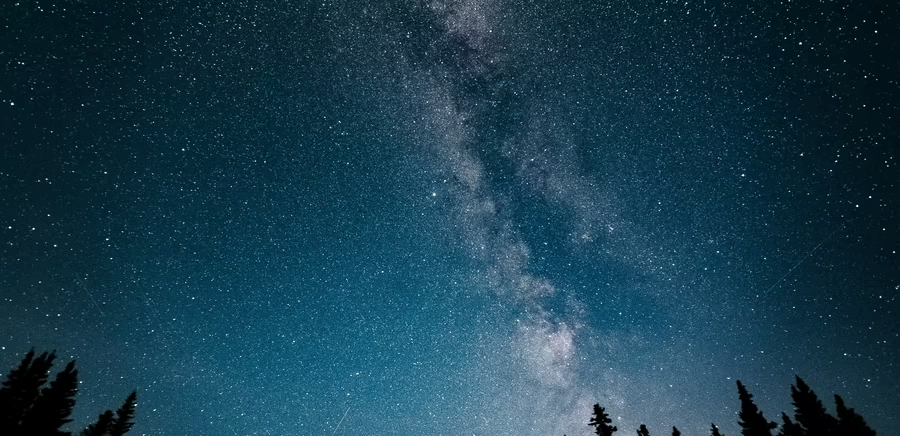
Even aside from the shooting stars in July and August, the island is well worth a visit for astronomy enthusiasts. This is because the conditions here are also excellent for astrophotography. The Milky Way, for example, is a popular subject for photography. Captured against the backdrop of the sea or rock formations, it looks even more beautiful. Good vantage points include the summit of Vidova Gora with its panoramic views, the coastline and the olive groves.
Inland, just about 20 kilometres from Sutivan, lies the Blaca Hermitage. The complex, nestled amongst the cliffs, was built by monks in the 16th century. Today, it houses a small museum. Here, for example, you can marvel at a large telescope dating from 1935. It came to the monastery when the Viennese priest and amateur astronomer Nikola Miličević conducted his research here . He was active in disseminating astronomical knowledge, published his own journal and discovered several comets. The two asteroids discovered in 1999, ‘Nikola Miličević’ and ‘Brač’, were named in his honour.
Top tips for watching the Perseids
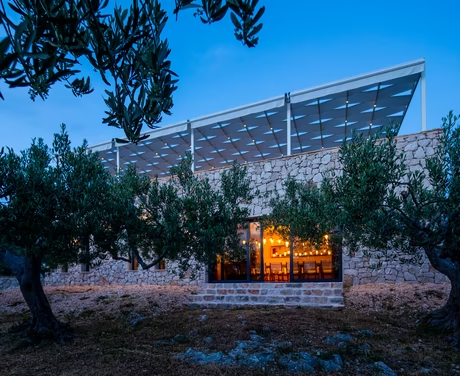
If you want to watch shooting stars on Brač, there are plenty of suitable spots. The most comfortable way to do this is by lying down in the ‘Astrokino’. Bring a blanket, some cushions, or perhaps even a deckchair. The best time is after midnight. Let your eyes adjust to the darkness slowly – that means no mobile phone lights for 20 minutes! The larger the section of the night sky you can see, the better. Because shooting stars are usually very fast, you can see them better with the naked eye than with binoculars.
If you miss the Perseids in 2025, there’s no need to be sad. They’ll be back next year. Further opportunities to observe major meteor showers are already coming up in October. The Draconids can be seen from 6 to 10 October, coinciding with the Orionids (2 October to 7 November). These, in turn, give way to the Leonids (6 to 30 November). At the end of the year (28 December to 12 January), it is the turn of the Quadrantids. In April (16 to 23), the Lyrids follow, then the Eta Aquariids (19 April to 28 May).
Tip!
Would you like to come and stargaze too? Why not book your favourite room via our website today – that way you’ll get the best price.