As Lush as at Hotel Lemongarden
Our guests are delighted by many of the things that make our boutique hotel right by the sea so special. The design of the rooms, for example, the fantastic cuisine and the warm-hearted staff. But one of their undisputed favourite places is the pool, sparkling in the sunshine in the middle of the magnificent flowering garden.
For those who have always wondered how to make their own greenery flourish, we have gathered the best gardening tips from Hotel Lemongarden.
5. Mai 2026

Spectacular Flowers: Bougainvilleas
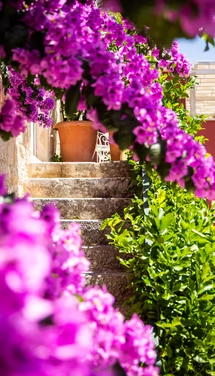
What immediately catches every guest’s eye are the bougainvilleas glowing in vibrant magenta. They are also known as paper flowers and are instantly associated with Croatia, Greece and the south of Italy. Their original home, South America, has made this climbing shrub well suited to the conditions of southern Europe. It loves hot locations in full sun. The more sun bougainvilleas receive, the more magnificent their white, pink, purple and red flowers become.
If you would also like to bring a southern feeling into your garden or onto your balcony, a south-facing wall is ideal. Bougainvilleas like to be well protected. They need regular watering, but the water should not be allowed to collect. Phosphate-rich fertiliser every one to two weeks gives them strength. They like to climb, and they do so quickly, which is why they need a trellis or another form of climbing support.
The catch: bougainvilleas need an ambient temperature of at least 10 to 15 degrees Celsius. If it gets colder than that in winter, they need a place to overwinter. They should be moved there before the first frost.

A gardening tip from Hotel Lemongarden: in spring, bougainvilleas tolerate a proper pruning so that they can sprout again. The milky plant sap can be slightly irritating to sensitive skin, so it is best to wear gloves when pruning. With good care, they bloom all summer long.
Palms: One Big Family
When your gaze drifts from the sun lounger towards the sky and catches in the green leaves of a gently swaying palm tree, the sight is the very essence of summer. Although “palm” is actually a very imprecise term. The family of this tropical plant includes more than 2,600 species. And they are all fascinating.
What many people do not know is that, from a botanical point of view, palms are more closely related to grasses than to trees. Very large grasses, admittedly. In their natural environment, some species can grow up to 60 metres tall. Their seeds can weigh up to 22 kilos, as in the case of the Seychelles palm, and their leaves can reach a length of 25 metres, as with the raffia palm.

The lemon trees, whose pretty blossoms delight the eye and whose fragrance fills the air, gave Hotel Lemongarden its name. Their fruit finds its way into many a dessert in the patisserie. The Mediterranean climate of Dalmatia is ideal for citrus trees. In gardens a little further north, lemon trees should be kept as container plants.
Lemon trees also love a sheltered, sunny spot, and they are not winter-hardy. Anyone who wants to make sure their personal “Lemongarden” thrives should use special citrus soil, terracotta pots and weekly fertilising. Ideally, citrus fertiliser should be used for this. Lemon trees are only pruned in late winter. Their winter quarters must also be bright.

Bright places with plenty of sunshine and high humidity have proven to be the ideal location. With the exception of the parlour palm, which also thrives in darker rooms, palms are true sun worshippers. It is important that they do not become waterlogged. Some species are so hardy that, with suitable protection, they can even overwinter outdoors in Central Europe, such as the windmill palm. In symbolism, palms stand for victory, wisdom and immortality.
Tip!
Do you already know Igor and his team? Together with Clinton, Nikolina and Tomislav, our head gardener takes care of the wellbeing of our plants at Hotel Lemongarden. What a wonderful job they do is something not only we see, but also our guests, day after day. Come and see for yourself.