International Space Week: Reaching for the Stars
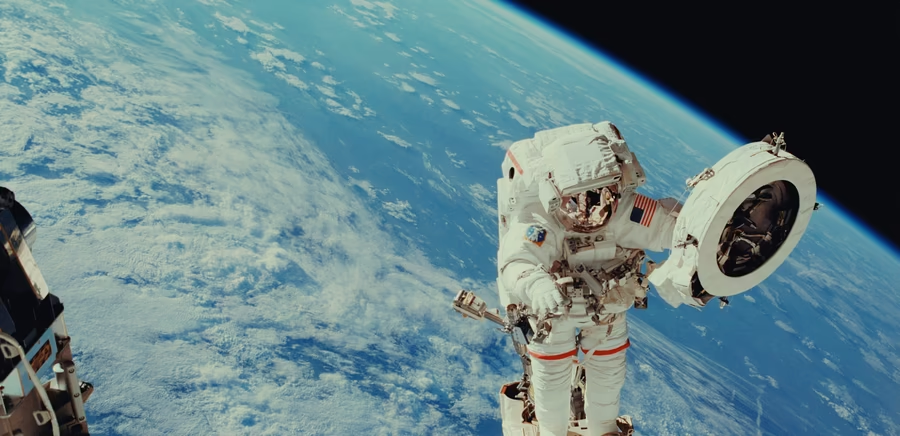
International Space Week begins every year on October 4. Launched by the United Nations (UN) in 199, World Space Week celebrates the contributions of space research and space technology to our understanding of the universe. Croatia also has much to offer in this regard. Organizations around the world—including space agencies, observatories, schools, and museums—participate in this event.
October 6, 2026
Why is the International Space Week celebrated?
The start and end dates for the International Space Week celebrations were not chosen at random. On October 4 1957, Sputnik 1, humanity’s first artificial satellite, began its journey into Earth’s orbit. And on October 10 1967, the Outer Space Treaty finally entered into force. It governs the peaceful use of outer space. Each year, Space Week is held under a different theme. This year’s theme, “Rocket Revolution,” follows last year’s theme, “Life in Space” (2025). The aim is to focus in particular on access to space and commercial spaceflight.
What does Croatia have to do with international space exploration?
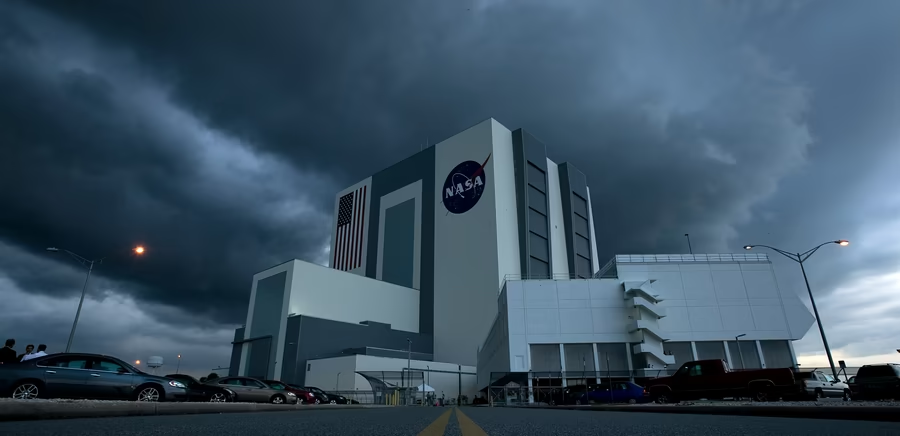
Although no Croatian citizen has yet participated in a manned spaceflight, this fact should not detract from the tremendous contributions that people from Croatia have made to space exploration to date. One key figure in this context is Milojko “Mike” Vučelić. Born in 1930 in Garešnica, he studied mechanical engineering at the University of Zagreb. His interest in aviation was sparked at an early age; he completed pilot training in Vršac. After working in Germany, he moved to the United States in 1965. There, the mechanical engineer initially worked for the aircraft manufacturer Cessna before serving as a project manager and one of several directors for the American Apollo space program from 1966 to 1978. However, he had been closely involved with the Apollo program since its inception in 1962. Among Vučelić’s responsibilities was the development of lunar landing concepts.
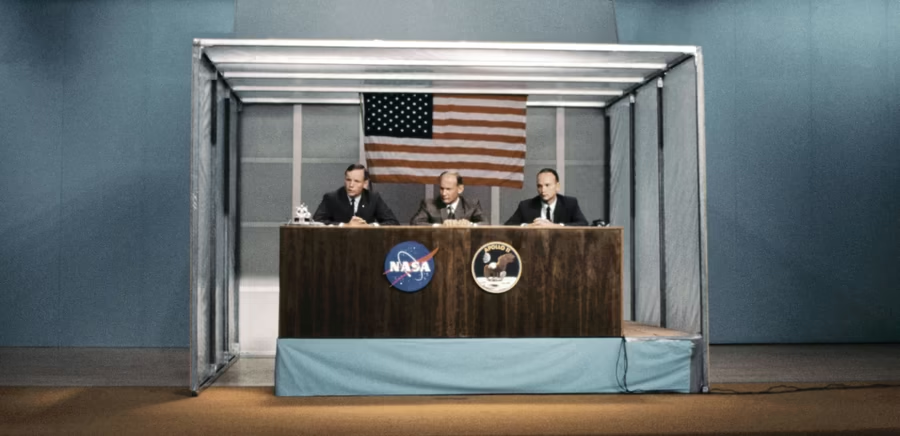
When an oxygen tank exploded aboard the spacecraft during the Apollo 13 mission in 1970, Milojko Vučelić was the man who received the historic distress call, “Houston, we’ve had a problem.” He led the engineering team, which had to improvise quickly: the lunar module was used as a makeshift lifeboat. It brought the crew safely back to Earth. U.S. President Richard Nixon awarded Vučelić the Presidential Medal of Freedom for his efforts. This is the highest honor a civilian can receive in the United States. “Mike Vučelić’s name may not be as well known as those of Armstrong, Aldrin, and Collins. But it is precisely he and hundreds of other engineers who are the true strength of the Apollo program,” wrote the Associated Press shortly after the Apollo 11 landing.
Croatian Women in Space
In modern space exploration, there are two women who have made remarkable contributions. One of them is Marina Brozović. “My first connection to space happened when I first became truly aware of the night sky—I was no older than six,” she recalls. She, too, studied at the University of Zagreb; unlike Vučelić, however, she chose physics. Further studies took the ambitious scientist to the U.S., where she eventually applied for a position at NASA’s Jet Propulsion Laboratory. Today, she is a globally recognized expert in radar observations of near-Earth asteroids and discovered a rare triple asteroid system.
Daniela Jović, who was born in Slovakia, can be described as a Croatian by choice. She is something of a pioneer in the Croatian space sector, despite lacking a technical background. Instead, Jović leveraged her economic, strategic, and communication skills to launch CroCube, Croatia’s first nanosatellite, into space in 2024. She is now an ambassador for the EU Space Academy and founded the Croatian space consulting firm Orbitalyx.
Following in History's Footsteps
Most people, whether they have a scientific, business, or other background, are fascinated by the night sky. Did you know that stargazing on Brač actually has a particularly long tradition? In fact, the Blaca Hermitage—founded in the 16th century—once housed the largest telescope in the Balkans. Installed by Father Nikola Miličević in the early 20th century, it remains the third-most powerful telescope in all of Croatia to this day. The star-loving monk calculated orbital paths, published papers on bursts of brightness, and discovered two comets.
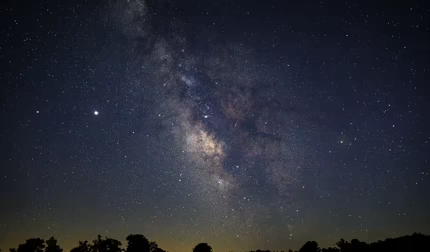
The night sky over Brač has lost none of its radiance. Guests at the Hotel Lemongarden can take advantage of the darkness over the sea to spot celestial phenomena, watch shooting stars, and gaze at the Milky Way. Croatia’s pioneering work in the field of astronomy may often be forgotten, but with Croatia’s accession to the Artemis Accords in September 2026, a “small step for Croatia, but a giant leap toward our shared future in deep space” has been taken, as NASA representative Gregory Mann said, paraphrasing the famous quote. The 74 countries that have signed the agreement so far are committed to the peaceful use and transparent exploration of space.
Tip!
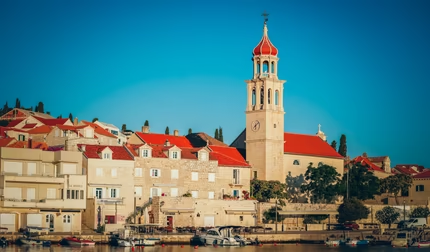
Stars Inside, Too: Guests at the Hotel Lemongarden enjoy not only the countless stars in the Croatian night sky, but also five stars of exceptional brilliance. They twinkle above our boutique hideaway, located right on the harbor in Sutivan. Exceptional service, plenty of charm, and luxurious accommodations are guaranteed.



FAQ
-
When is International Space Week celebrated?
International Space Week begins every year on October 6 and ends on October 10.
-
Who was Milojko Vučelić?
Milojko Vučelić, who was born in Croatia, was involved in NASA’s Apollo program from the very beginning (1962). He received the Presidential Medal of Freedom for his role in the rescue of the Apollo 13 crew. He was the recipient of the legendary radio transmission, “Houston, we have a problem.”
-
How many stars does the Lemongarden Hotel have?
The Lemongarden boutique hotel, located at the harbor in Sutivan on the Croatian island of Brač, is a five-star hotel.
Helena