Typical of Croatia: Peka, a Dalmatian specialty
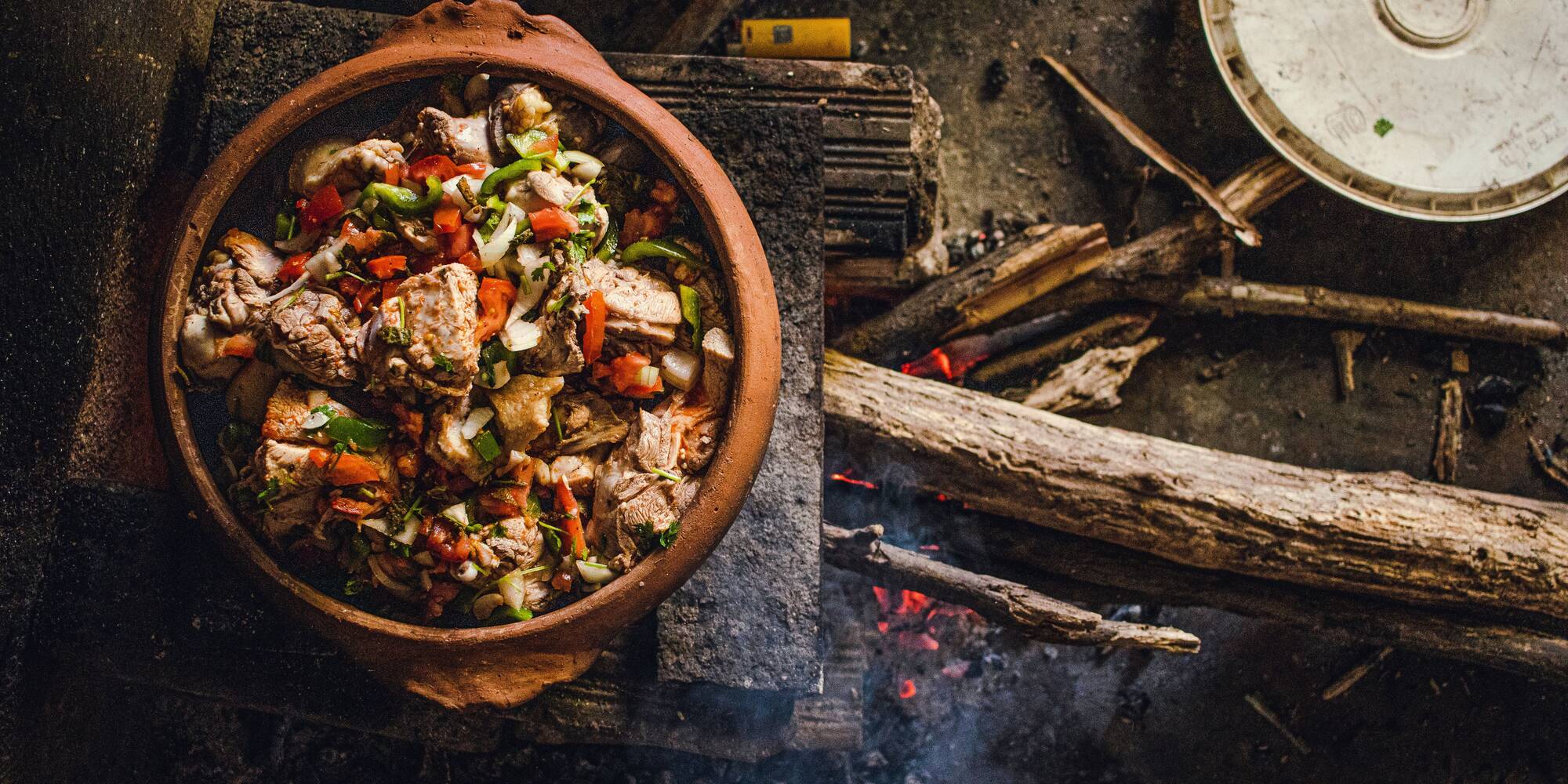
It is one of the many culinary highlights that Croatian cuisine has to offer: peka. Although it is popular throughout the country, it originated in Dalmatia. We’ll explain what the term means, why peka is typical of Croatia, and what makes peka dishes so special.
October 6, 2026
What is Peka?
The term “peka” refers both to a method of preparation and to the cooking vessel used. Peka can be translated as “ash bell”: it is a bell- or dome-shaped cover made of cast iron, clay, or ceramic. Meat, vegetables, seafood, or even bread are placed on a flat baking sheet, over which the peka is placed. Both are set on an open fire and completely covered with hot ashes or glowing charcoal. Ideally, the embers should be made from hornbeam or beech wood. It’s important that the peka is completely surrounded by the heat. This is the only way to ensure even cooking.
Preparing Peka dishes requires a fair amount of patience. Depending on how much food is under the Peka, it can take several hours for it to braise until tender. In addition to meat, seafood, fish, and vegetables, various herbs are also used. The dish is turned occasionally and deglazed with wine or broth. The result is a stew with exceptionally tender ingredients.

When do people eat peka?
Because it takes a long time to prepare—often as long as three hours—peka isn’t an everyday meal but something enjoyed on special occasions, such as birthday parties or holidays. Many families have special open fire pits in their homes for preparing peka. Peka pots are typically designed to serve four to eight people, which is why the meal is a convivial, communal experience. In restaurants, due to the long preparation time, you can usually only enjoy peka if you order it a day in advance.
Peka in Croatia: Traditional and Authentic
The peka (also known as čripnja or sača) is perhaps the most authentic form of food preparation in Croatia. Archaeological findings show that in the eastern Mediterranean and along the Adriatic, clay cooking vessels covered with ash and charcoal were already being used to cook food as early as the Bronze Age (2200 to 800 B.C.). The peka as we know it today is the result of a long evolutionary process that incorporated Venetian and Ottoman traditions. The term “peka” is derived from “pekar”—the word for baker. It’s a fitting name, since the food bakes in the heat just like a loaf of bread.
How to Make Peka
In Dalmatia, a particularly popular version of peka is the one made with lamb. Ingredients for about 4 to 6 people:
- 1.5 kg lamb (shoulder, shank, or leg), with bones, cut into large chunks
- 1 kg waxy potatoes, peeled and quartered
- 2 large onions (quartered)
- 3 carrots (cut into thick slices)
- 2 bell peppers (coarsely diced)
- 2 tomatoes
- 2–3 fresh sprigs of rosemary
- 4–6 crushed garlic cloves
- Salt, black pepper
- 100 ml olive oil
- 150–200 ml dry white wine
Preparation:
About an hour before cooking begins, light a wood fire. Beech or olive wood works well for this because their embers last a long time. Let the fire burn down to hot embers. Preheat the peka as well by placing some embers on top of it.
While the fire is blazing, rub the lamb pieces with salt, pepper, and half of the olive oil.
In a separate bowl, toss the vegetables and potatoes with oil, salt, and garlic.
Grease the flat side of the peka with olive oil. Place the lamb pieces and rosemary sprigs on a bed of potatoes and vegetables.
Close the peka and cover it with embers. Let it roast for about an hour. Then turn the meat and pour white wine over it before letting it roast for another hour. To give the meat a crispy crust, reduce the heat during the last quarter of an hour by removing some embers from the lid. The meal is ready when the meat falls off the bone. By the way, this dish works just as well if you don’t have a peka. In that case, cook the ingredients in a cast-iron roasting pan in the oven.
Tip!
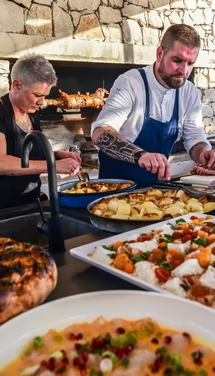
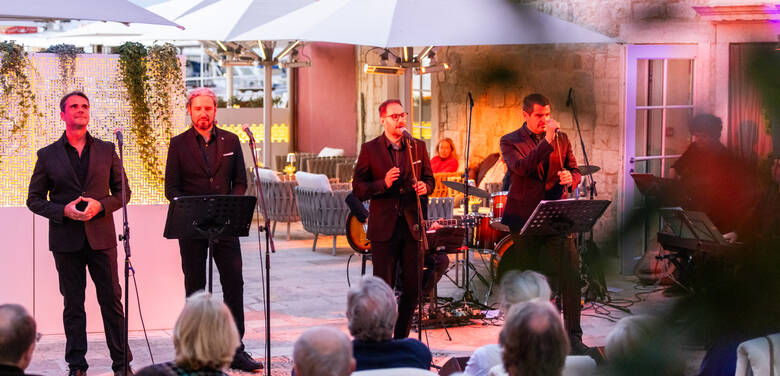
Guests at the Hotel Lemongarden can enjoy authentic Peka, for example, during the “Final Taste of Summer” from October 22 to 26, 2026. As an atmospheric way to wrap up the summer, these four days are all about camaraderie. Guided hikes, authentic Klapa music, and, of course, plenty of culinary highlights are all part of this four-day special.
FAQ
-
What is Peka?
“Peka” refers both to stews that are braised under a clay or cast-iron lid and to the cooking pot itself.
-
Where can you eat peka?
Peka is a special meal that people enjoy with family or friends, or that can be ordered in advance at a konoba. At the Lemongarden Hotel, guests can also experience this traditional meal at events such as the “Final Taste of Summer.”
-
What is “Final Taste of Summer”?
“Final Taste of Summer” is a four-day special event that focuses on enjoyment and camaraderie: guided hikes are just as much a part of it as traditional music and a cozy atmosphere.
Helena