Zlatni Rat: Croatia’s most beautiful beach is changing
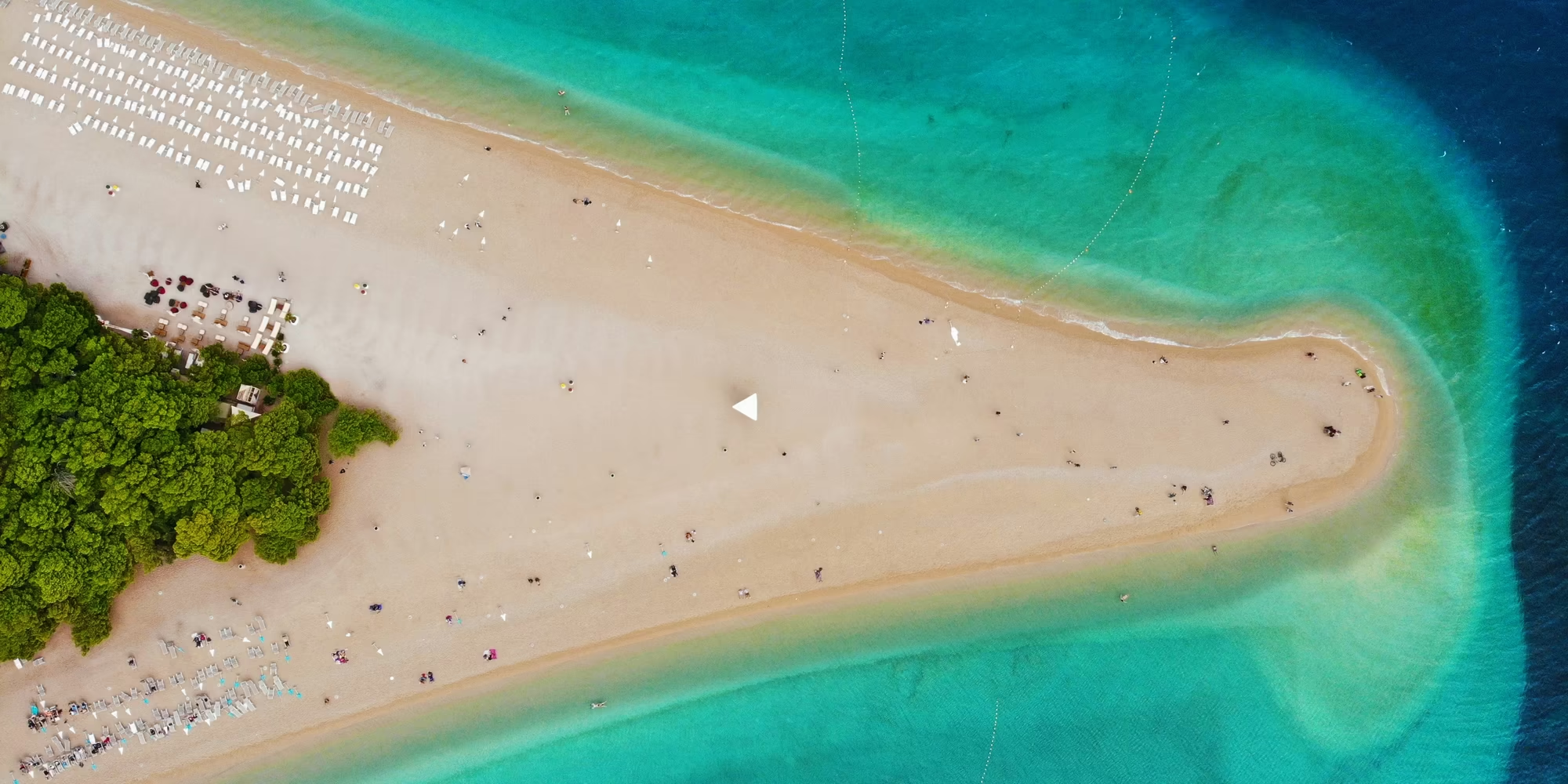
Hardly any ranking of Croatia’s most beautiful beaches is complete without mentioning Zlatni Rat, the famous “Golden Horn”. Located near Bol, this distinctive stretch of beach has always changed its shape over time. Now, however, the changes appear to be becoming permanent.
31. August 2026
A popular destination on Brač
Guests at Hotel Lemongarden in Sutivan love setting off in one of the hotel’s rental cars to explore the beautiful beaches of Brač. One of the most famous is Zlatni Rat, located on the island’s southern coast, around 40 kilometres from the hotel. This distinctive headland, approximately 500 metres long, stretches out into the shimmering sea and is made up of smooth, rounded pebbles. Its shape has always been constantly changing, mainly because of Zlatni Rat’s unique geographical location.
The headland extends into the Hvar Channel, where different sea and air currents meet directly at its tip. The direction in which the Golden Horn points has traditionally changed depending on the prevailing wind: during the stormy north-easterly Bora and the warm, humid southerly Jugo, or Sirocco, the tip points west, while the summer Maestral pushes it eastwards. The difference can amount to as much as 30 metres. While these shifts were once entirely natural and followed an age-old rhythm much like the tides, the appearance of Zlatni Rat has changed more permanently in recent years, increasingly as a result of human influence.

Natural wonders under threat
Severe weather has always had an impact on the headland. Storms such as Boris, as well as powerful autumn weather events, have at times completely reshaped the Golden Horn. As climate change progresses, events like these are becoming more frequent. Human activity is another factor that should not be overlooked. Construction work in the surrounding area has altered sea currents, while careless behaviour by visitors can also have an effect. Anchoring boats, for example, disturbs the seabed, which can in turn influence currents and ultimately the shape of Zlatni Rat. Responsible travellers should therefore avoid anchoring directly off the beach.
The smooth pebbles that make up Zlatni Rat originate from the nearby Vidova Gora mountain range. Over thousands of years, they gradually “migrated” from the highest point of all the Adriatic islands to this part of the coast. The beach is a protected natural site, and taking pebbles away is prohibited. If natural currents no longer continuously replenish the beach with new material, permanent erosion can result. That would be a great loss, as Zlatni Rat is not only one of Croatia’s most photogenic beaches, but also one of its most popular. Its northern side offers calm, sheltered areas, while the southern side provides ideal conditions for windsurfing and kitesurfing.
Tips for the Golden Horn
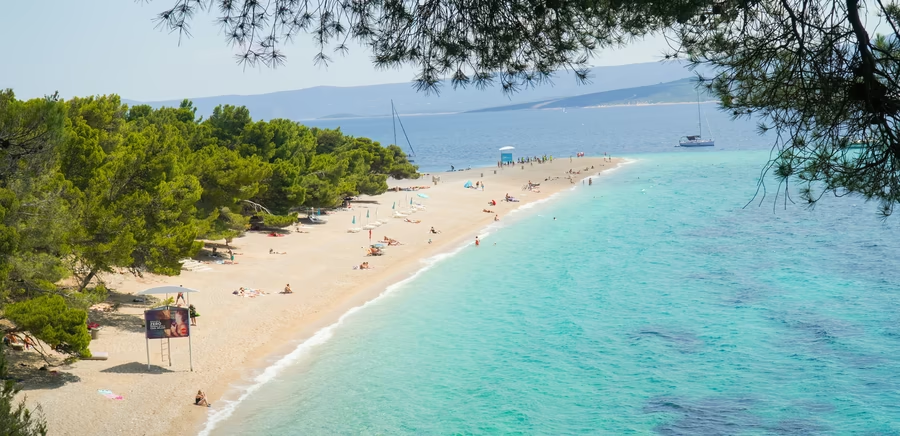
During the summer months, Zlatni Rat can get quite lively. The best time to visit is therefore early in the morning or in the evening, when the sun is already beginning to set. In the shoulder season, one of the most beautiful times to visit Brač, the beach can be enjoyed throughout the day, and it is much easier to find a perfect spot. The shady pine forest behind the beach is also home to the remains of an ancient Roman villa. Paths lead through the forest to a small rise where the ruins can be found.
Guests planning a day trip to Zlatni Rat will find sanitary facilities, accessible entrances, sunbed and parasol rental, beach bars, beach clubs, restaurants and kiosks. There is also plenty of variety, with activities such as stand-up paddleboarding, pedal boats, kayaking and volleyball. An aqua park directly in the water, complete with trampolines and climbing elements, adds even more fun. Dogs are not allowed directly on Zlatni Rat, but there is a designated dog-friendly area nearby.
Tip!
Just a few minutes’ cycle away, guests at the Hotel Lemongarden will find a private stretch of beach complete with comfortable sun loungers and a beach club. Delicious snacks, refreshing cocktails and a relaxed atmosphere make every stay unforgettable.

FAQ
-
How do you get to the famous Zlatni Rat beach on Brač?
Zlatni Rat is situated near the village of Bol in the south of the island of Brač. Guests at the Hotel Lemongarden can reach the beach by car in around 45 minutes. Alternatively, you can enjoy a leisurely trip there by boat or in a hire Mini Cooper.
-
Why is Zlatni Rat one of Croatia’s most famous beaches?
Zlatni Rat, also known as the ‘Golden Horn’, is famous for its unusual shape: the roughly 500-metre-long spit of sand juts out into the turquoise sea and constantly shifts slightly in direction due to the wind and sea currents. The beach is also particularly popular with water sports enthusiasts and surfers.
-
What can you experience on a trip to Zlatni Rat?
As well as swimming and relaxing on the beach, Zlatni Rat offers plenty of opportunities for water sports, walks and exploring. After a day at the beach, it’s also well worth visiting the nearby town of Bol with its cafés and restaurants.
Helena